By the end of the 1980s, computer science had found a way to keep software under control: structured programming in high-level languages such as Pascal. Not everyone saw this as progress. The satire “Real Programmers Don't Use Pascal” says: “Real Programmers use Fortran. Quiche Eaters use Pascal.” Whatever cannot be done in FORTRAN is simply written in assembler, and the greatest worry is a future full of UNIX hackers and Pascal programmers.
Robotics was even deeper in that world. Robots were programmed in vendor-specific, assembler-like commands or taught point by point with the teach pendant.
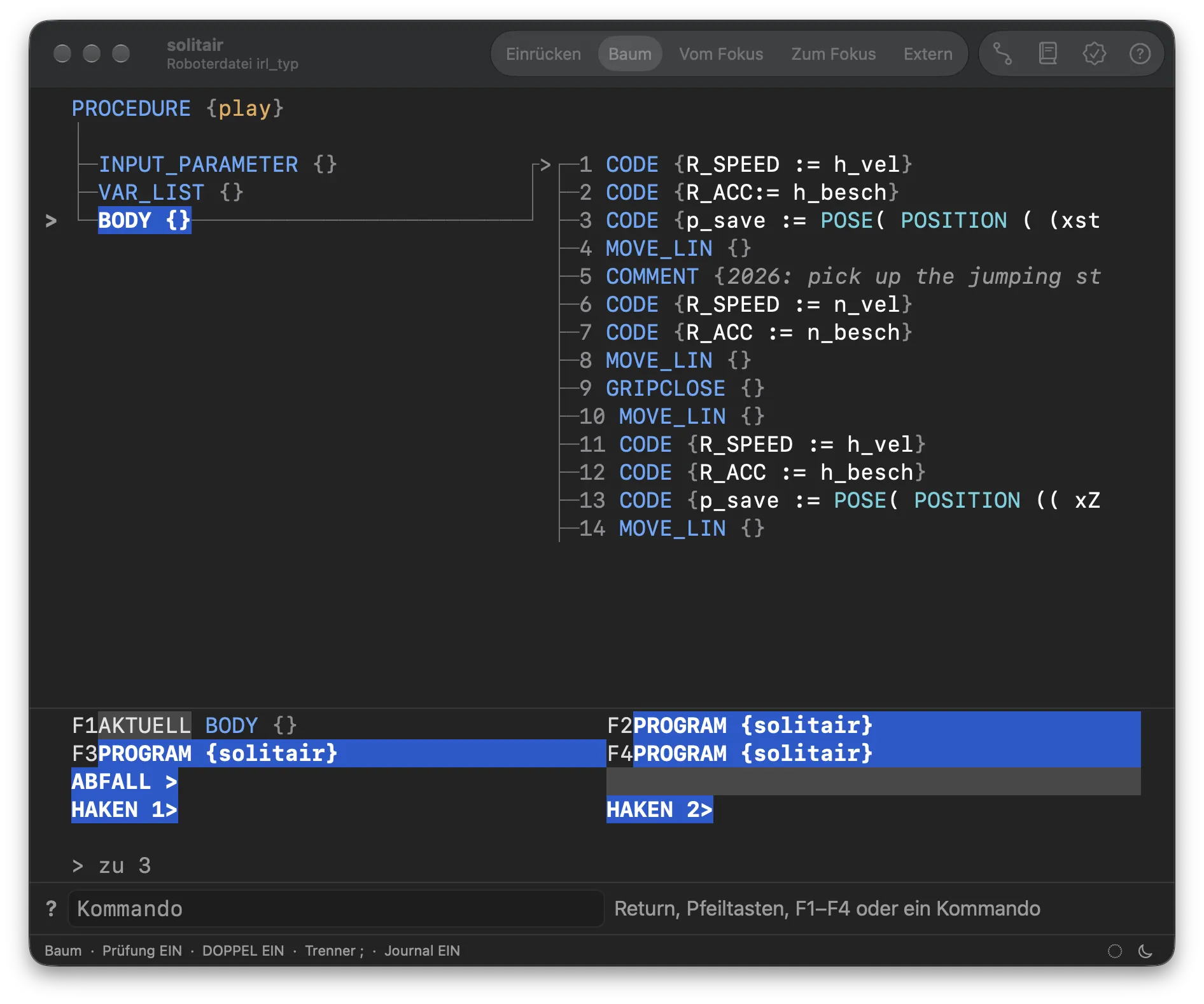
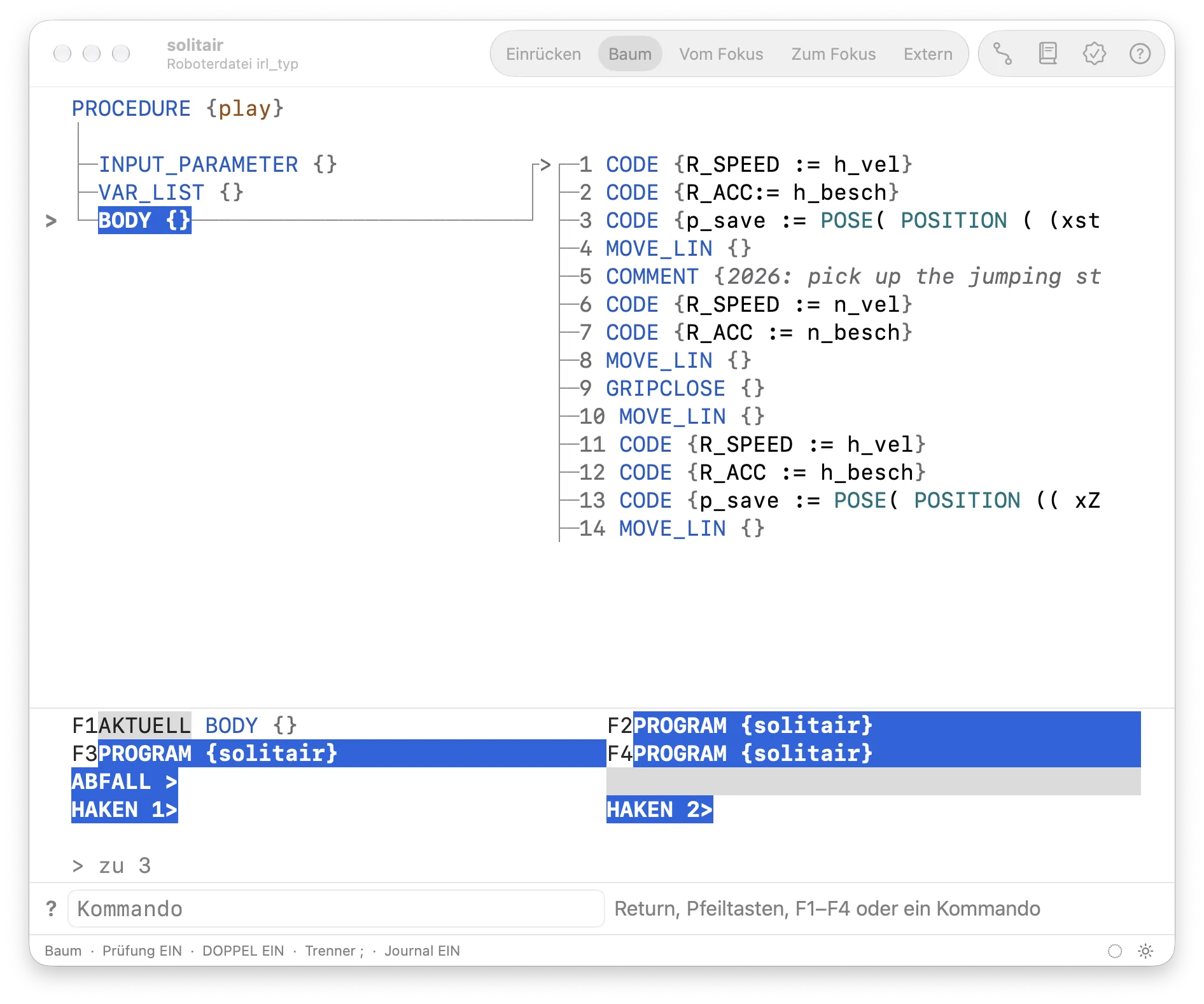
Dr.-Ing. Wilfried Jakob, a computer scientist, initiated the project and set out to close this gap. His idea: robot programs should come about the way good software does. The design grows as a structure in the tree editor BOIE, in the ESPRIT project 623 “Robot BOIE”, in which KUKA implemented the first industrial applications. Back in 1985, together with Dr. rer. nat. Christian Blume, he had shown in the book “PasRo – Pascal for Robots” (Springer) how Pascal can control a robot.
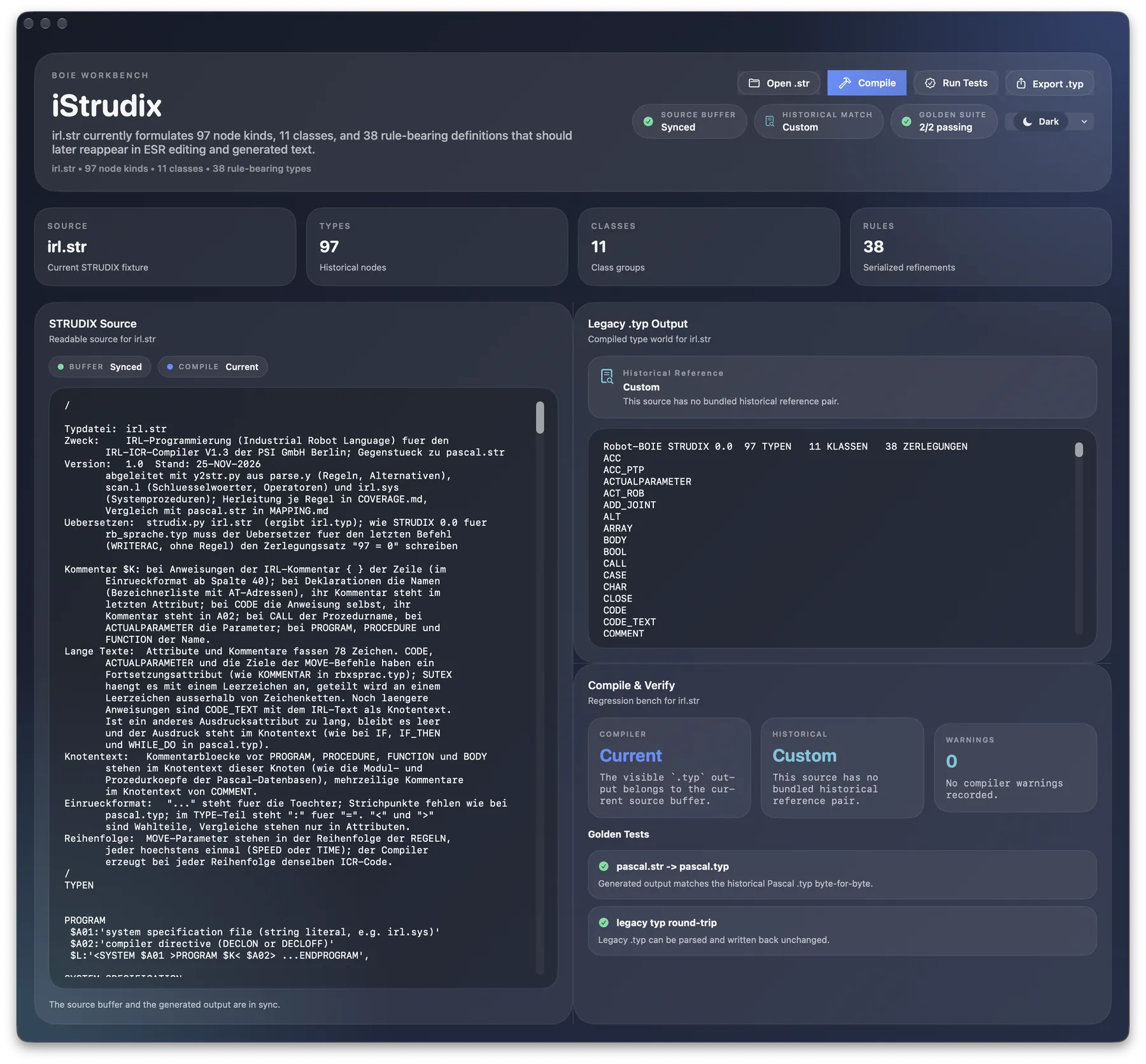
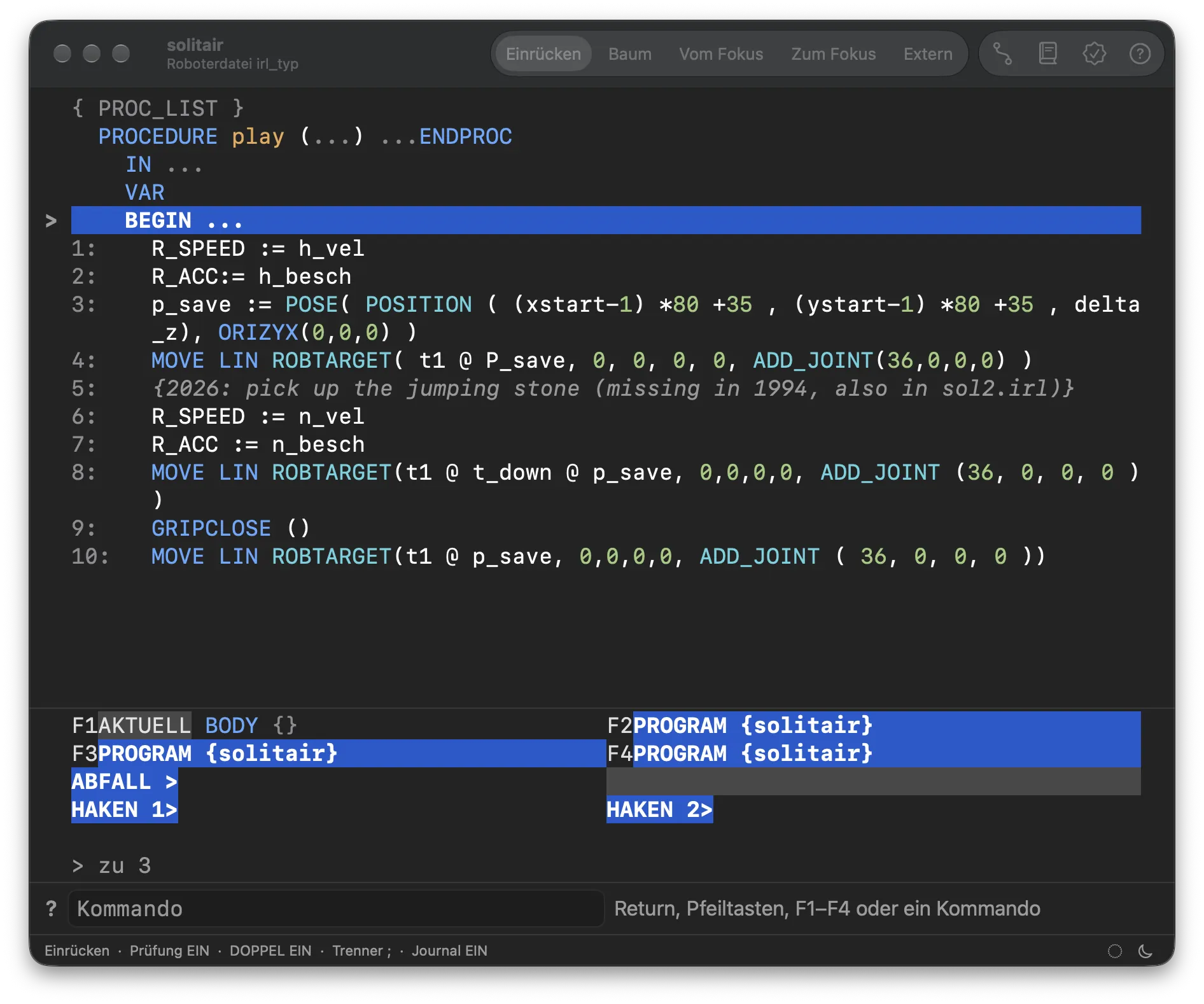
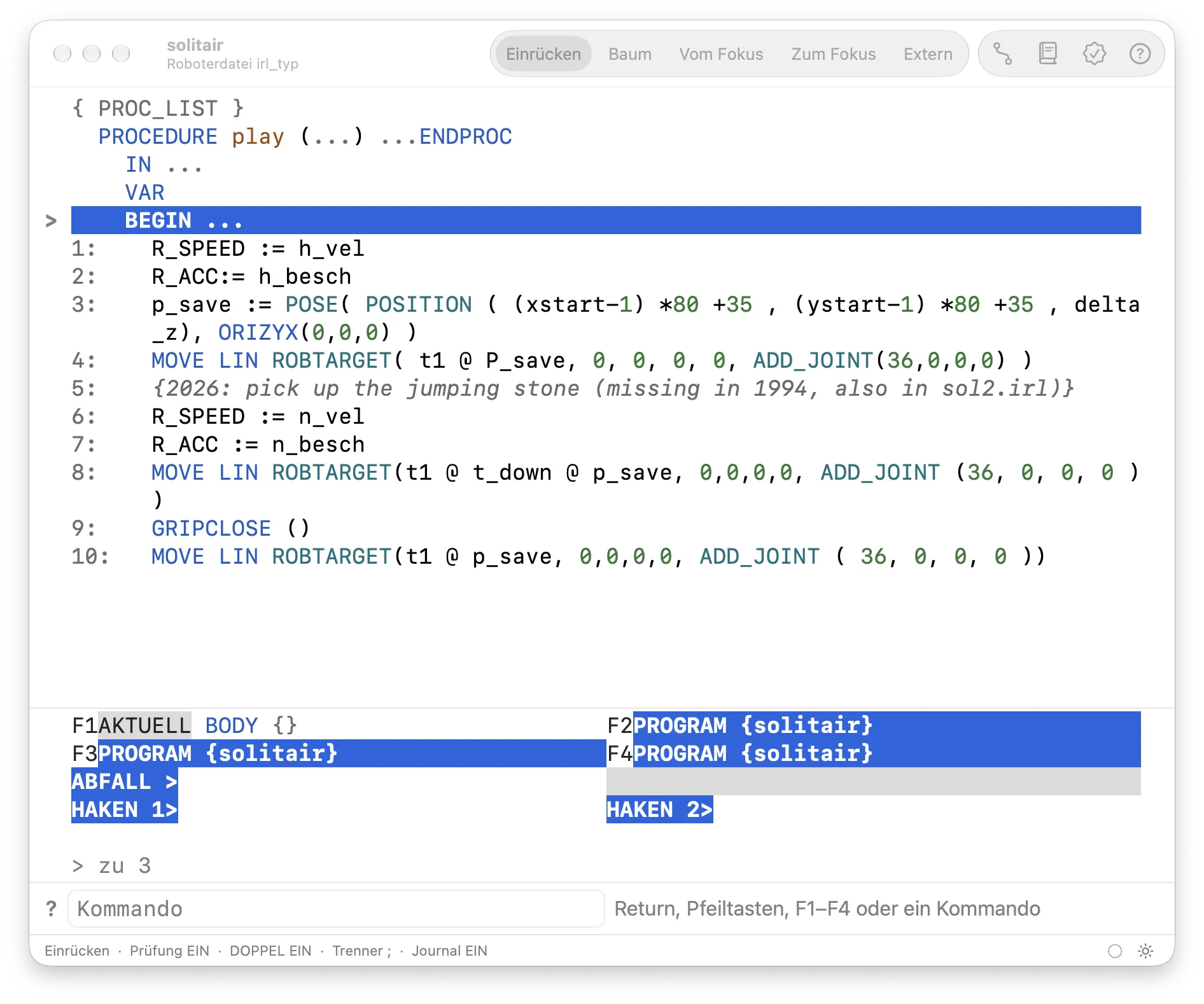
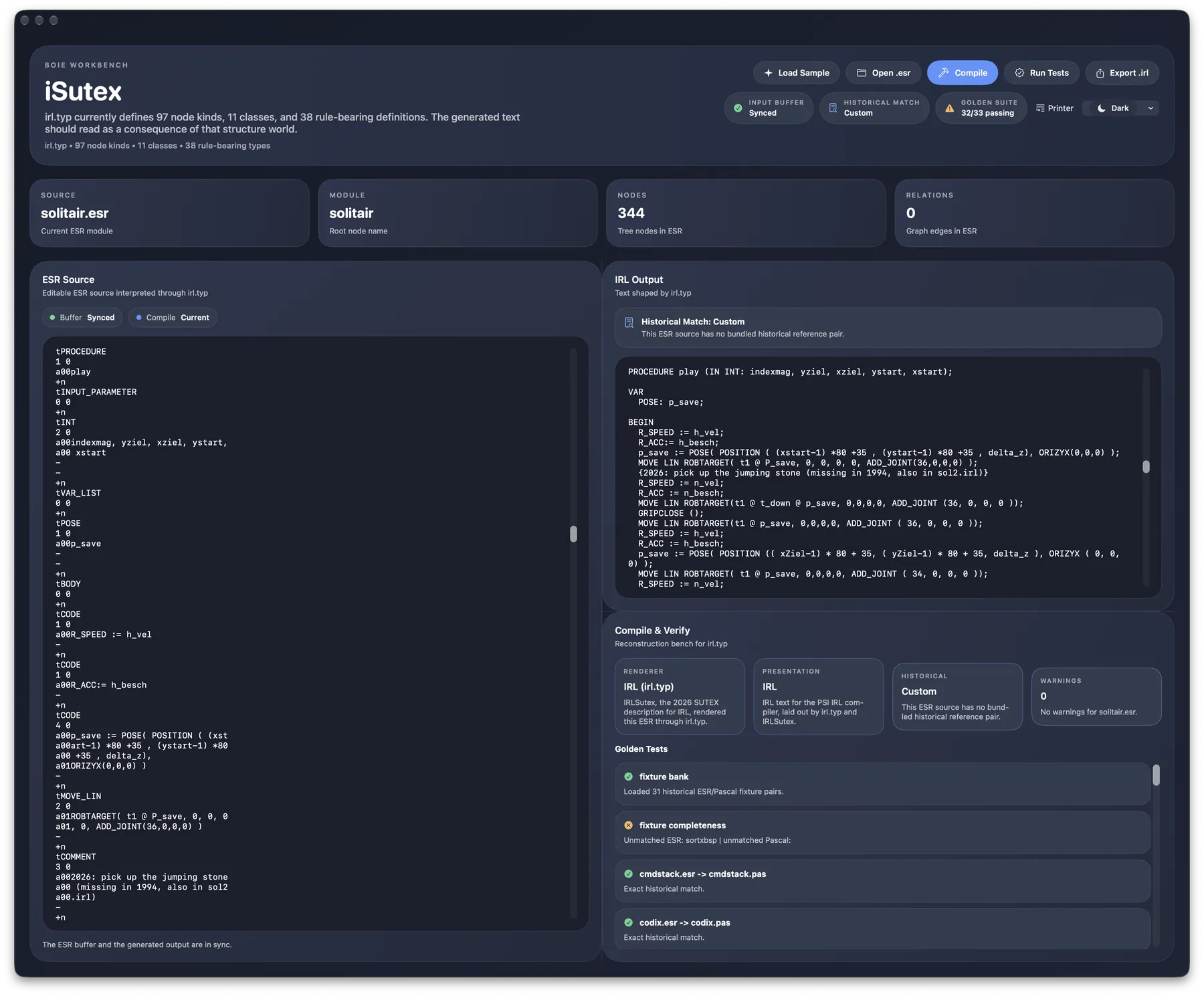
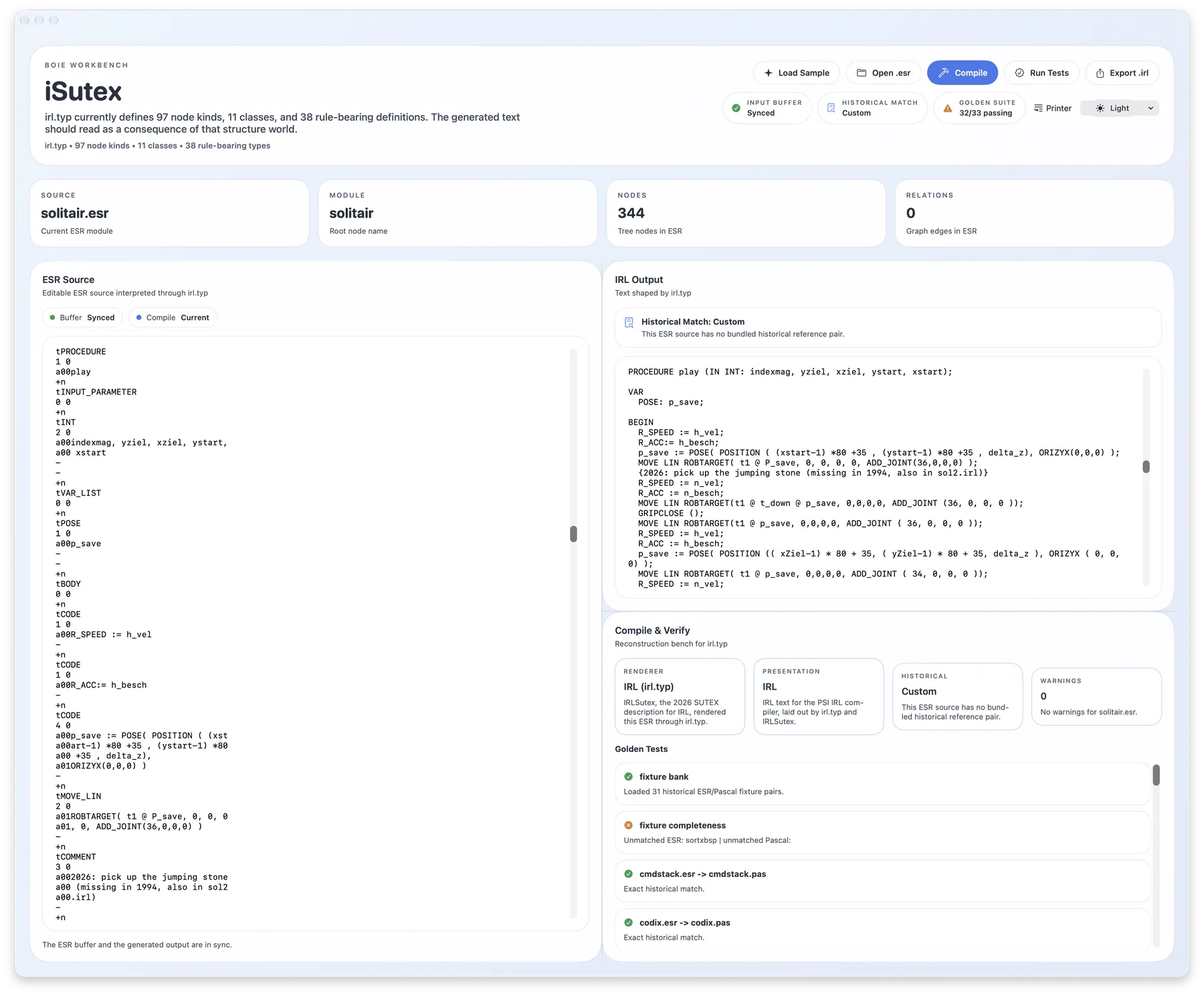
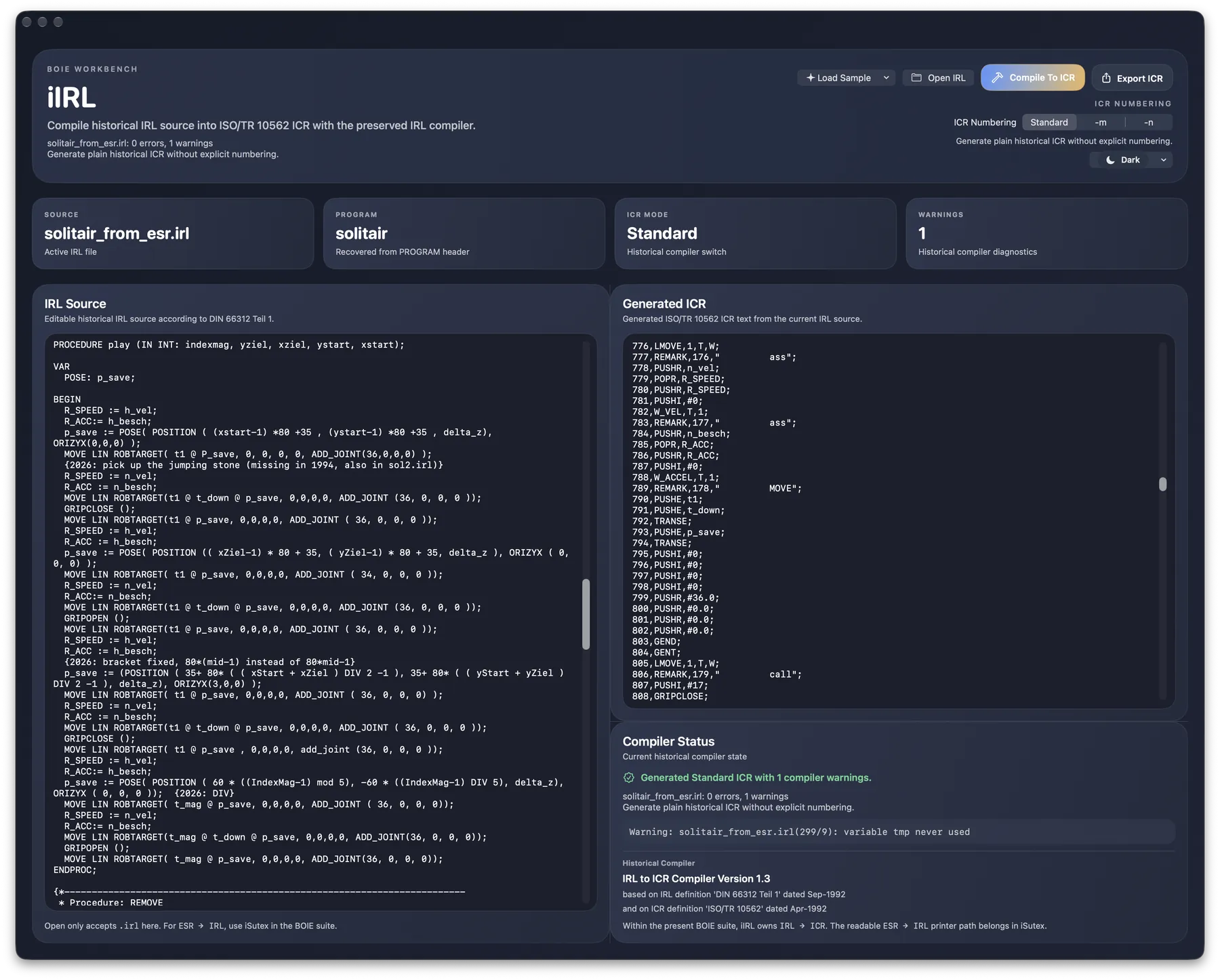
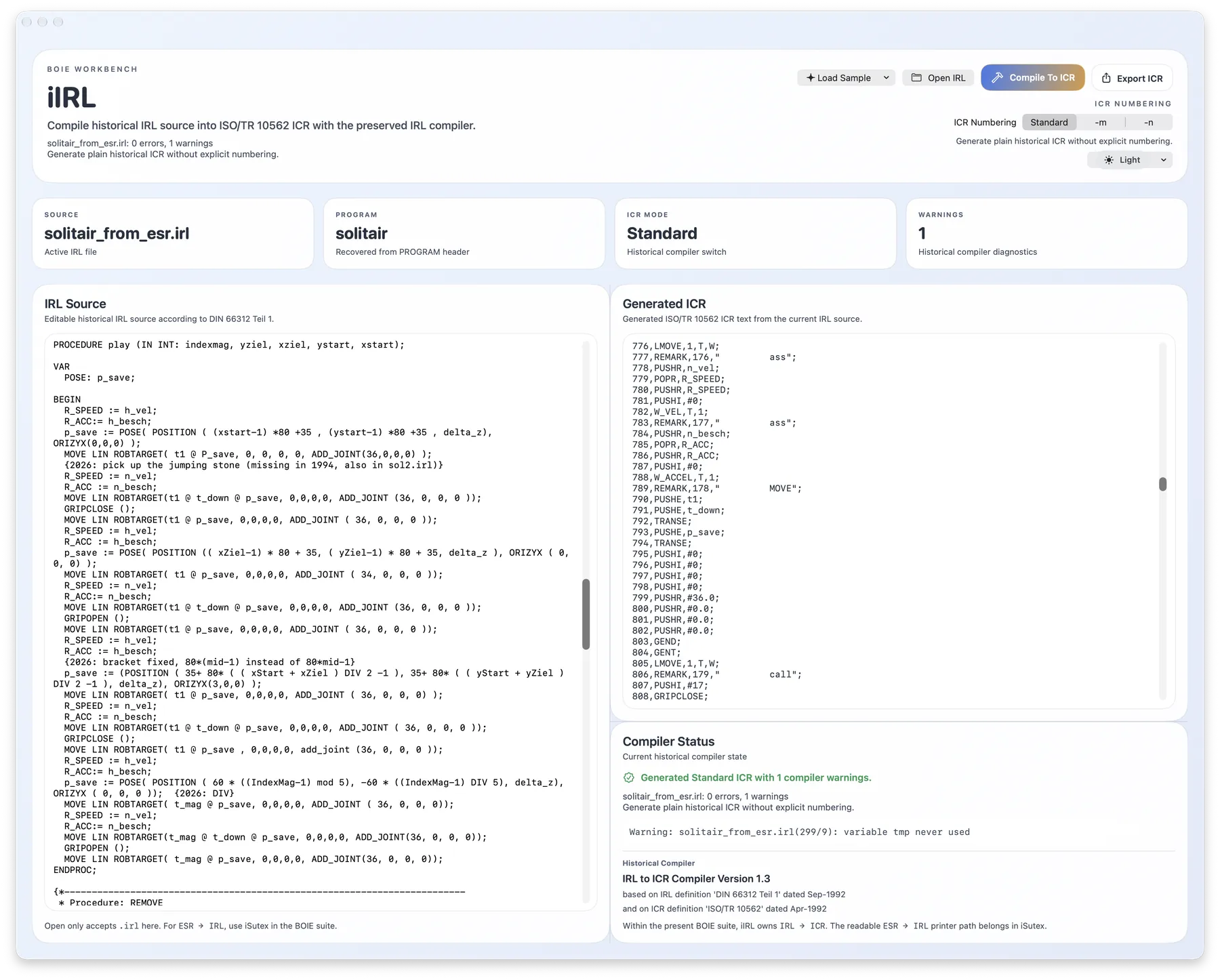
Later came IRL, a Pascal-like robot language that was standardised as DIN 66312. A compiler translates IRL into the vendor-independent intermediate code ICR, and the robot controller executes it.
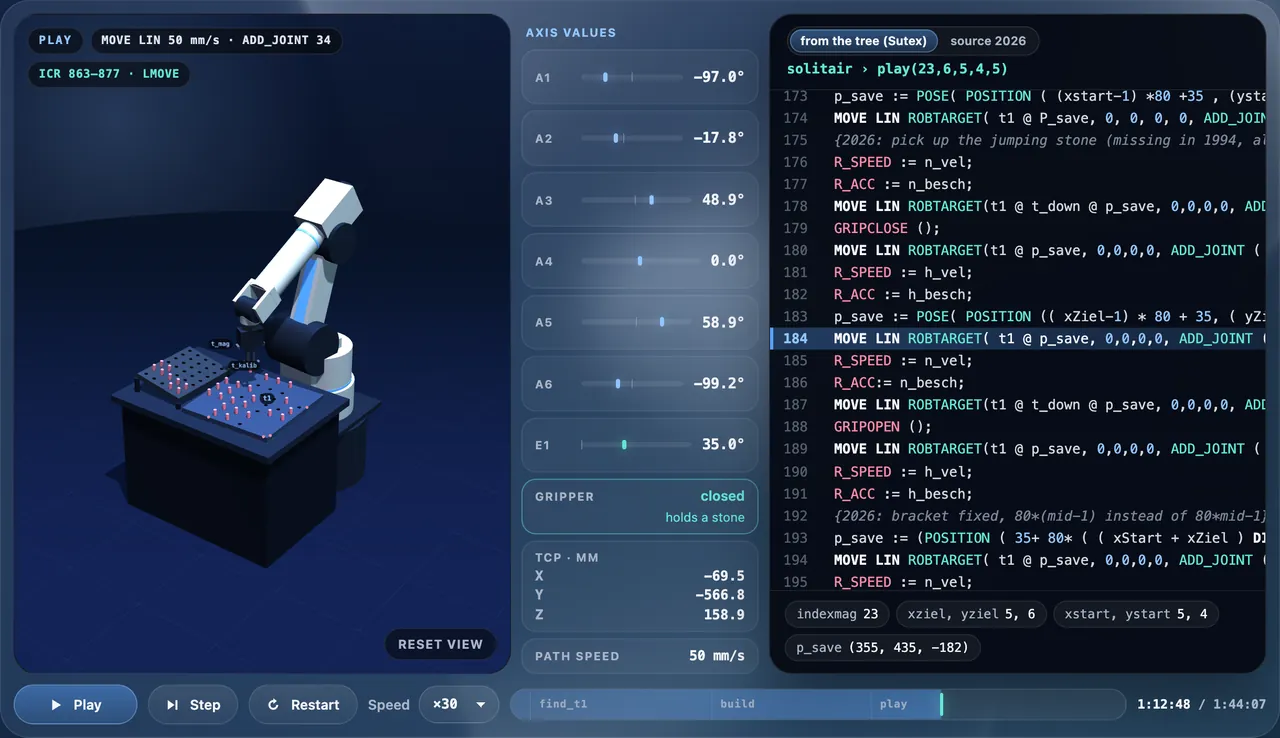
What this was meant to look like is shown by a file of 1 March 1988: sortxbsp.esr, a robot program as a typed BOIE tree in the robot language RB-SPRACHE. And in September 1992 the IRL compiler controlled a Reis robot at the “CIM Europe” conference in Odense.